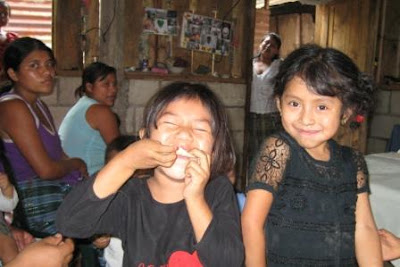
 As part of the health promoters' series of preventive health talks, this past Monday, we spent the morning in San Felipe focusing on the topic of malnutrition and making tortillas. But not just any tortillas... "tortillas nutritivas!" (nutricious tortillas). One of the most common complaints moms have of their often malnourished children is that their kids refuse to eat tortillas. This is the mainstay of the Mayan diet, the one food around which all other foods revolve. So you can understand why a mom would be distressed if her child refused to eat it. The health promoters have come up with a solution to getting kids to eat their tortillas and get more protein in their diet... mixing peanuts, sesame seeds, and sugar into the masa (tortilla dough). Though an expensive solution if cooked for the entire family, it is potentially affordable if moms only make the recipe for their children under age five. Below are some photos of moms learning the new recipes:
 ---
 Recipe #1: Dominga adds crushed peanuts to the corn tortilla masa (dough).
 ---
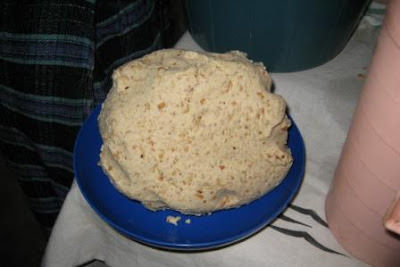 The peanut masa is ready to be made into tortillas.
 ---
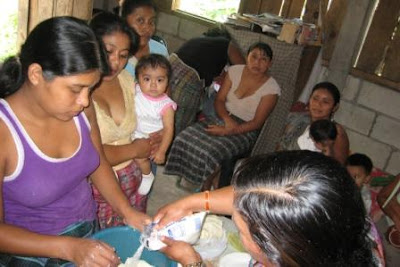 Recipe #2: Dominga adds sugar to another batch of corn masa. Once this masa is made into tortillas, sesame seeds will be sprinkled on both sides before they are cooked.
 ---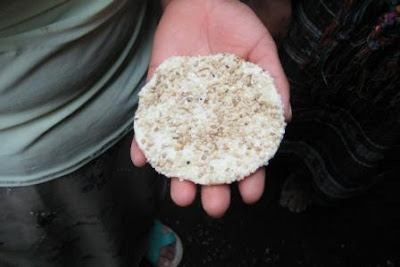
A sesame tortilla, ready to be cooked on the "comal" (griddle).
---

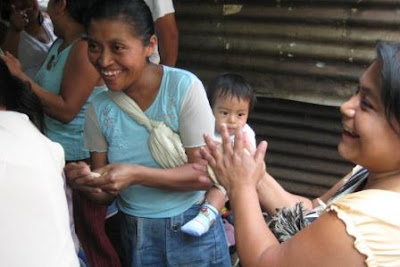 Moms gather in a neighbor's open-air kitchen to "tortillar" ("to make tortillas").
 ---
 Tortillas on the comal.
 ---
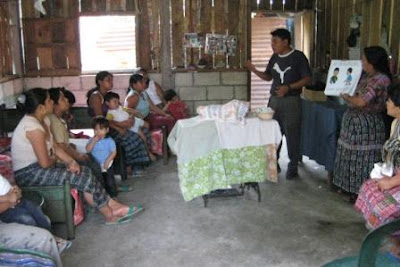 Before the tortillas are served, Vicente and Dominga give a talk on how to prevent malnutrition. (Visual aids courtesy of yours truly).
---
It is important for moms to give their children de-worming medication every six months after their second birthday. Parasites and worms are one common cause of malnutrition.
---

Often moms think that if their child takes a vitamin pill, it will stimulate their appetite and cure their malnutricion. What many don't realize is that if their children eat a variety of fruits and vegetables, they will get all of their necessary vitamins and minerals and won't have to spend money buying vitamin pills.
---
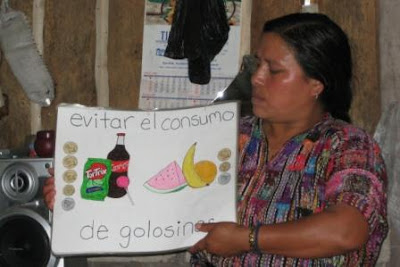 Avoid spending money on packaged junk foods such as chips and soda. Fruit is a much more nutricious snack, at a fraction of the cost.
---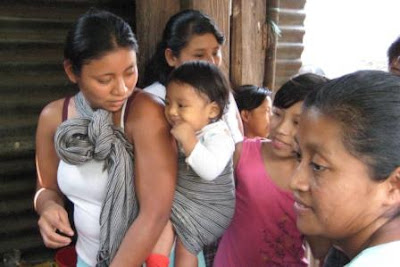
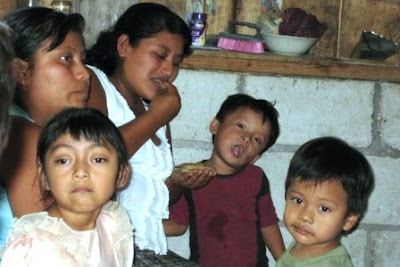
One mom looks on expectantly... will her child like the peanut tortilla?
---

Moms and kids, enjoying their tortillas nutritivas.
---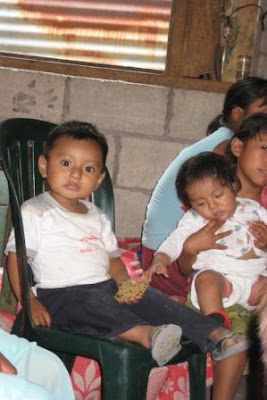
In this photo, a baby, trying to snatch his brother's tortilla... Mikey likes it!


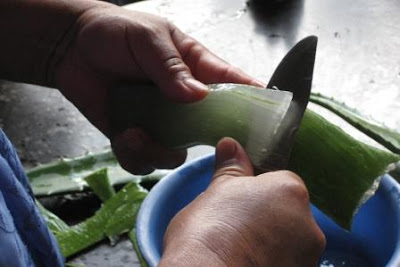
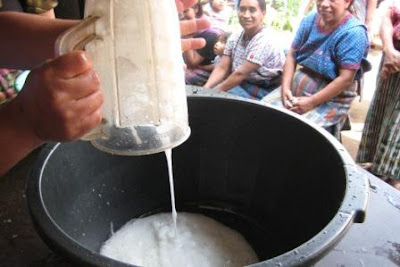
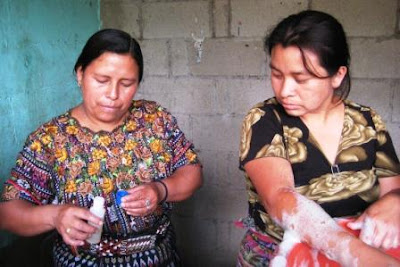
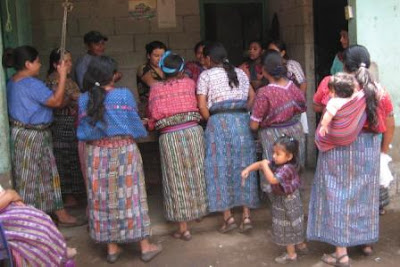
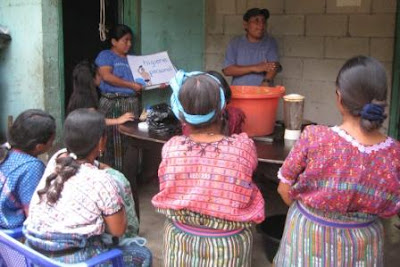
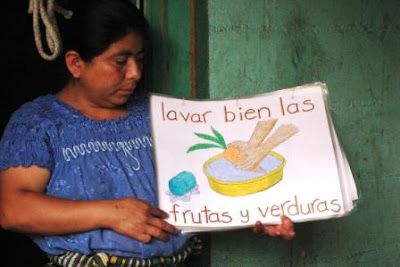
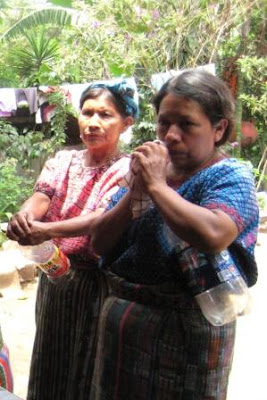
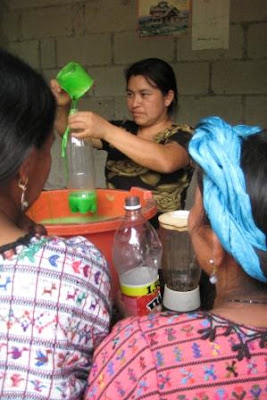
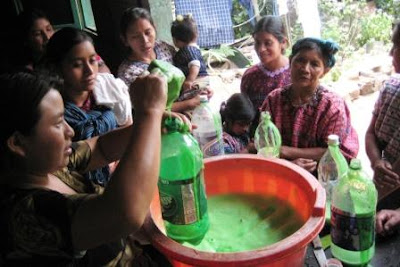
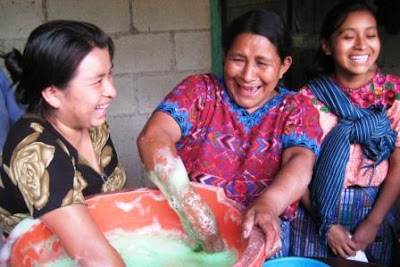 This past Thursday, we accompanied Vicente and Dominga to San Martín, one of the rural villages surrounding San Lucas Tolimán. The activity for the day? Making shampoo! "What does this have to do with health?" you ask (we asked ourselves the same question). The obvious perks to this activity were that the shampoo we made was anti-dandruff, and it was free to the women who came to participate. Shampoo here is sold in small packets (similar to what you see sometimes in hotel bathrooms). Because money is tight, families will often buy a packet (25 cents) on the day they need to wash their hair, as opposed to having a bottle around the house, as we are accustomed to. The main reason for this activity, however, is to provide a fun and valuable incentive for women to take a break from their morning activities of washing, cooking, and farm labor, in order to listen to a preventive health talk (see previous blog, "suero oral"). Here are some photos from the day: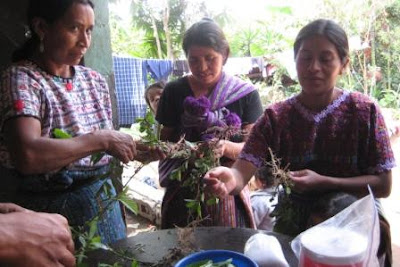
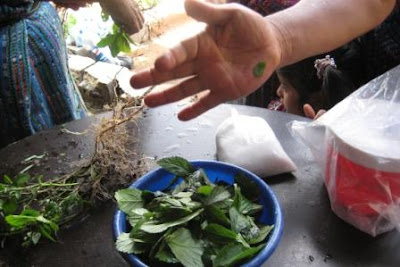 Escobillo leaves, ready to be boiled.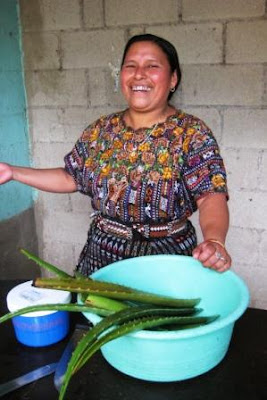


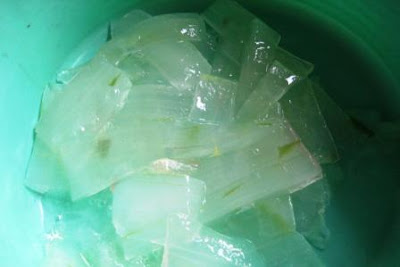





 Vicente (who lives in Quixayá), was so proud of his community's result!
 Dominga, being silly... This past month leading up to the Medioambiente training, we have had several discussions about how to get the 2nd year health promoters more interested and about how to provide opportunities for non-threatening self-assessment. Dominga really shone, coming up with several excellent ideas to break up the monotony, promote interactive learning, and incorporate assessments into fun activities.
 In her last mail package to us, my mom sent a frisbee, which we used for the first time this past Saturday. What a big hit!!! All the kids in our neighborhood came out to play, and we had a great time throwing the frisbee around all afternoon. Here are some photos I took of Shom and the kids:
 Shom, with Rosbin (our host-brother, in black), Juan, Lucia, and Jessica.
 Rosbin, winding up for a big throw.
 Lucia having some fun, while Rosbin waits impatiently for his turn.
 Running after the frisbee.
 Rosbin, waiting for a good catch.
